Canada & North America Market Entry & Product Development
FITEX — Textile manufacturer developing Canadian and North American opportunities across fabrics, T-shirt knitting and finished apparel.
Start with what the factory could credibly sell—not with the size of the market.
The mandate was to identify realistic North American opportunities for an overseas textile manufacturer. That meant understanding manufacturing capability first, then finding the customer segments, product expectations and commercial propositions that fit those capabilities.
Manufacturing capability
Understand fabrics, knitting, garment potential, quality level, customization and the production constraints that would define a credible offer.
Market fit
Research fabrics, T-shirts and garment companies in Canada and the U.S., then compare requirements, positioning and competitive intensity.
Commercialization
Convert the research into product specifications, samples, buyer discussions and client-development opportunities rather than stopping at a market report.
Research was used to define what should actually be produced.
More than 30 Canadian and U.S. companies across fabrics, T-shirts and garments were researched. The work also benchmarked the current T-shirt market and compared North American expectations with European-market references.
The market study became a manufacturable technical specification.
The complete development sheet below is shown as it was built—including its original project header, measurement chart, T-shirt technical drawing, size table, fabric and construction specifications, testing requirements and stitch details.
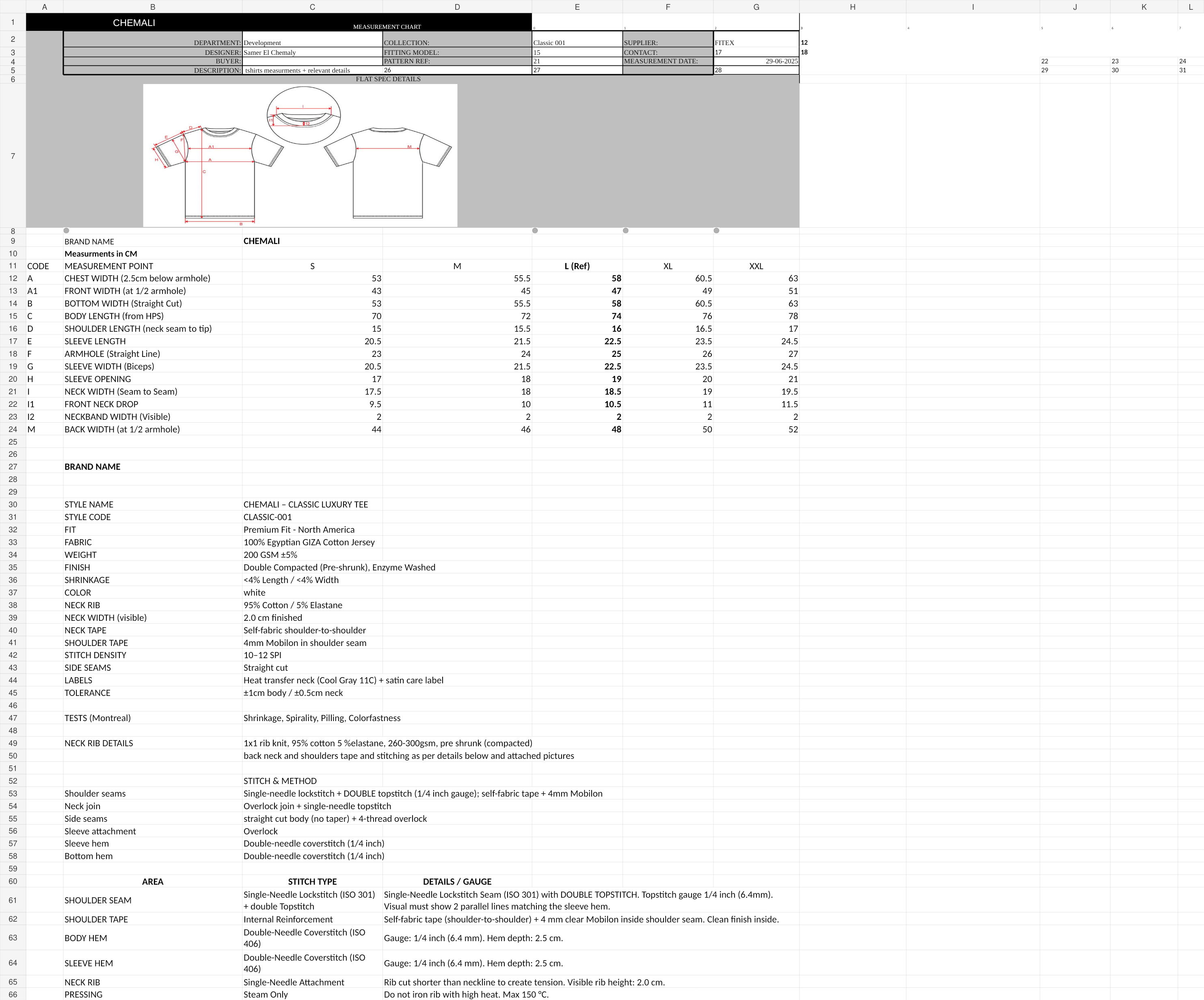
Research translated into factory-ready detail.
Rather than stopping at a market study, the work converted North American benchmarking into an executable production brief. The full sheet preserves the project context and technical detail exactly as developed.
Market insight moved through design and into factory samples.
Working with local designers, the findings were converted into fit, construction and finishing decisions, communicated to the manufacturer and developed through multiple physical samples.
Research and product development were translated into a North-American-facing proposition.
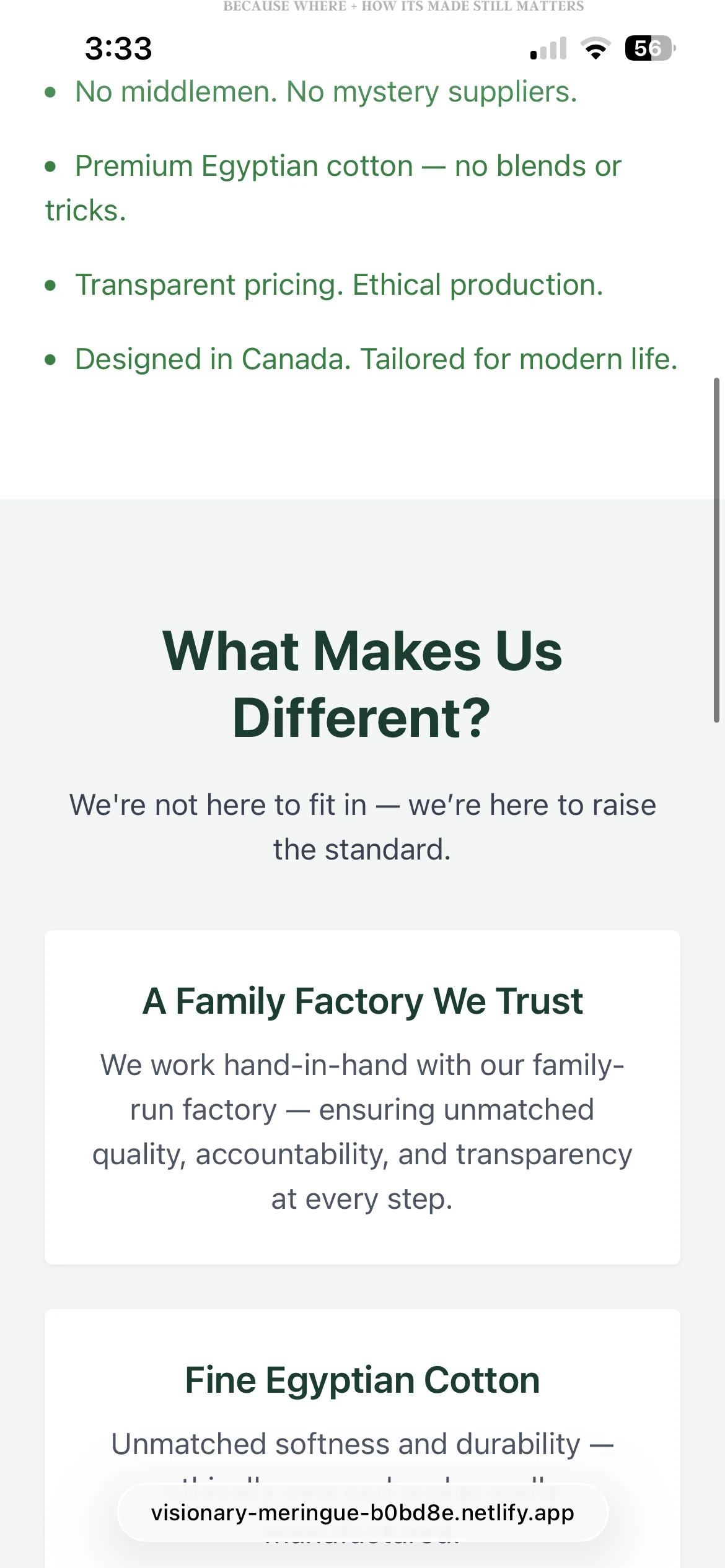
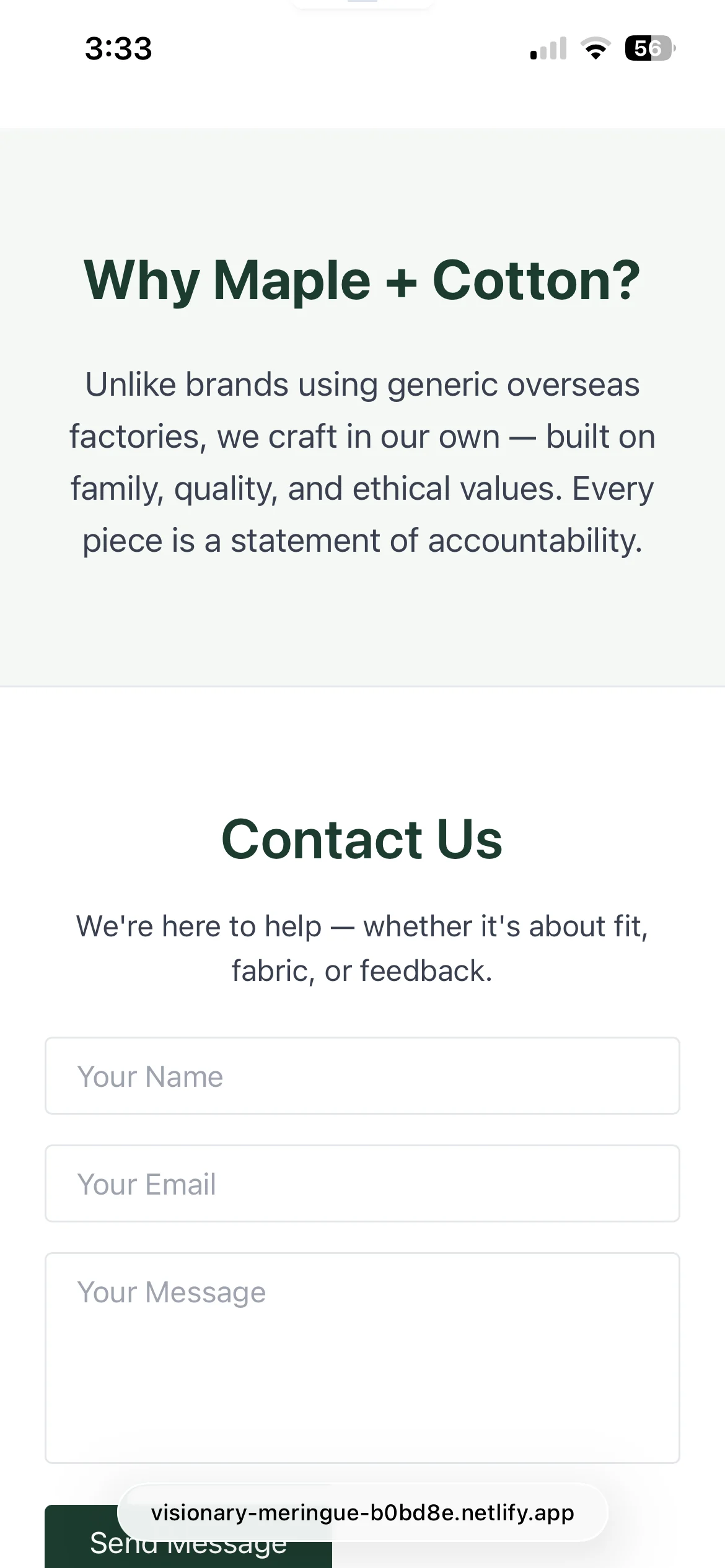
Alongside the technical product work, I created an early Maple + Cotton website/brand prototype to explore how a finished-garment offer could be positioned for the Canadian market. It was a commercialization concept—not a final launched brand.
What the prototype tested
The concept turned manufacturing strengths and market findings into customer-facing language: premium Egyptian cotton, traceability, a family-run factory, Canadian design/fit and a clearer direct proposition.
View early prototype ↗

The work progressed from desk research into real buyer engagement.
The outreach was selective rather than high-volume. Around ten researched companies were contacted directly, with two serious buyer discussions and one prospect progressing to an in-person factory visit.
Two Canadian clients were secured.
The project produced real customer acquisition in Canada, alongside U.S. commercial development. The client references below are included as concrete evidence of market-entry execution.
A technically viable product still had to remain economically viable.
Product benchmarking, technical development and sampling had progressed. The planned production was then paused when new U.S. tariff measures and wider geopolitical cost uncertainty materially changed the economics and risk profile of the intended launch.
Pause was a commercial decision—not a product-development failure.
The product had reached specification and sample development. The issue became whether the original landed-cost and market-entry assumptions still supported scaled production.
Strategic Decisions & Market Learnings
Additional detail on how manufacturing capability, market intelligence, product development and commercial feedback were connected.
Capability before market sizeWhy attractive segments were filtered through manufacturing reality
The market-entry work began with the factory rather than a generic North American opportunity map. A segment was only attractive if FITEX could credibly meet its product, quality, customization and production requirements.
North America required its own product definitionBenchmarking changed fit, construction and testing requirements
Rather than assuming an existing garment could simply be exported, the work benchmarked North American T-shirt expectations and compared them with European references. The result was translated into a market-specific technical brief and local designer collaboration.
Market research had to reach the factory floorThe output was a product—not only a presentation
The research only became commercially useful when it changed what was designed and produced. Buyer/market observations were converted into measurable specifications, then communicated to designers and factory production for physical sample development.
Long-cycle B2B qualificationWhy a factory visit mattered even without an immediate order
One serious prospect progressed to visiting the factory. In a manufacturing business-development cycle, this represented deeper technical and operational evaluation than a standard introductory meeting and demonstrated genuine commercial engagement.
External economics can override sunk development workWhy production was paused
The product-development work had already generated specifications and samples. When tariff/geopolitical conditions materially changed the cost assumptions, the decision was to reassess commercial viability rather than scale production under a weaker economic case.
Capabilities evidenced through the work above.